
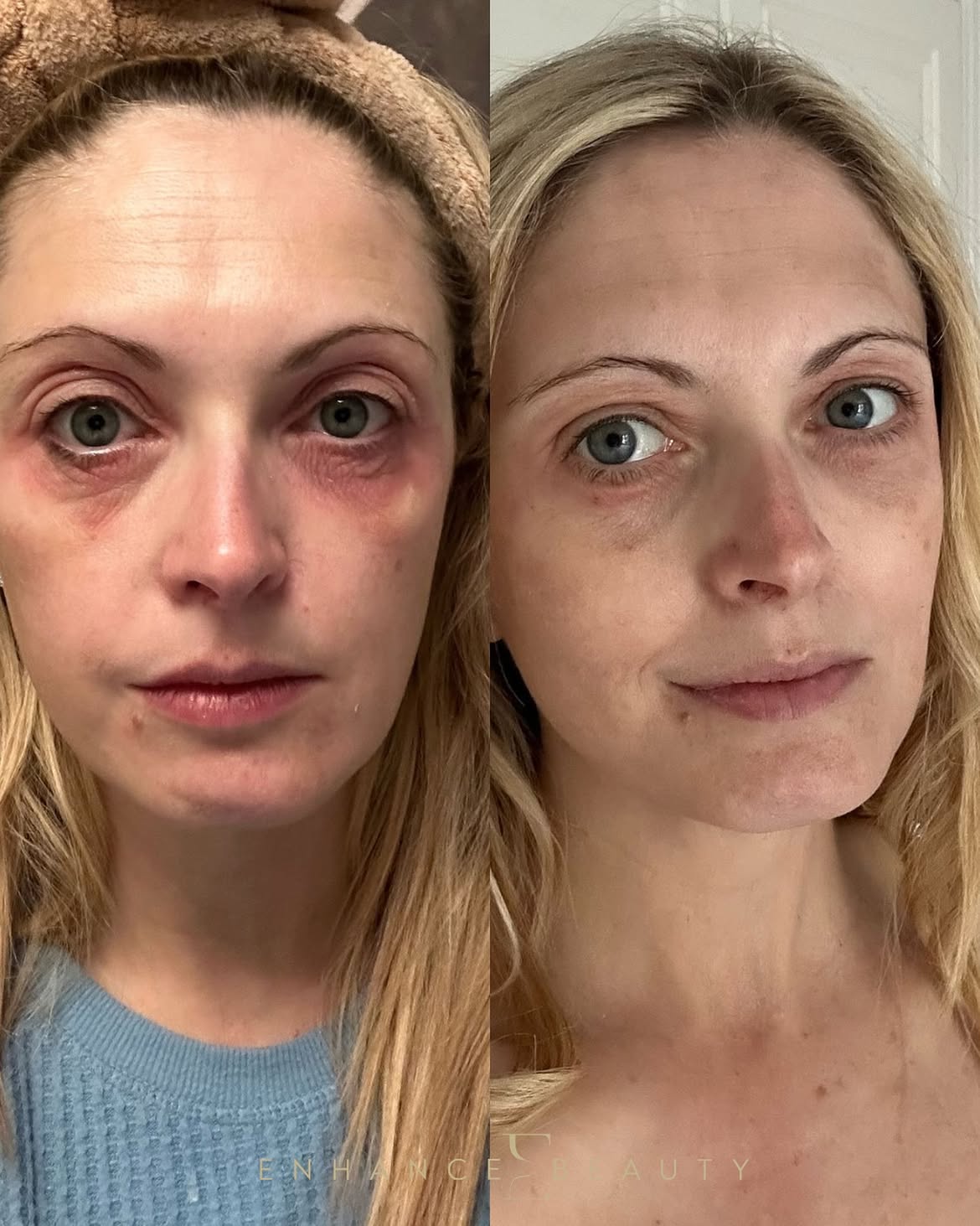
Skin Health / Perimenopause
Perimenopausal Skin Changes — What is Happening and What Actually Helps

Jamie Cordice
Functional Skin Practitioner | Certified Menopause Coach
If your skin has started to feel like it belongs to someone else, you are not imagining it. Perimenopause affects the skin in ways that most women are completely unprepared for. And because nobody talks about it, a lot of women spend years trying to fix the surface without ever understanding what is driving the change.
In clinic I see this almost every week. Women in their late 30s and 40s whose skin has shifted in ways they cannot explain. The dryness that appeared overnight. The breakouts they have not had since their teens. The loss of that natural firmness and glow that used to just be there.
What is Perimenopause and When Does it Start?
Perimenopause is the transitional phase leading up to menopause, when hormone levels, particularly oestrogen and progesterone, begin to fluctuate and gradually decline. Most women think of this as something that happens in their early 50s. In reality, perimenopause can begin as early as the mid to late 30s and typically lasts between 4 and 10 years.
That means a woman in her late 30s noticing changes to her skin could already be experiencing the early effects of perimenopausal hormone shifts. Not ageing. Not stress. Hormones.
What Perimenopausal Skin Changes Actually Look Like
Because oestrogen plays such a significant role in skin health, when levels start to fluctuate the skin often shows it quickly. Here are the most common changes I see in clinic.
—Increased dryness and tightness, even if you have never had dry skin before
—Loss of firmness and elasticity around the jaw, cheeks and neck
—Skin that feels thinner or more fragile than it used to
—Increased sensitivity to products that previously worked
—Adult breakouts on the lower face, jaw and chin
—Dullness and uneven skin tone
—Slower healing and recovery
Perimenopausal skin changes are not signs that your skincare has failed you. They are signs that something has changed internally. And that is actually useful information.
Why Oestrogen Matters So Much for Skin
Oestrogen supports collagen production, helps the skin retain moisture, maintains the skin barrier and keeps cell turnover functioning well. When levels are stable, the skin tends to look and behave at its best.
As oestrogen fluctuates and declines, collagen production slows, the skin barrier becomes less resilient, hydration levels drop and the skin’s ability to repair itself becomes less efficient. These changes happen gradually, which is why they are so easy to dismiss or attribute to other causes.
The Role of Cortisol and Stress
Perimenopause is often accompanied by increased stress, sleep disruption and a general feeling of running on empty. Cortisol actively works against skin health. It breaks down collagen, increases oil production, triggers inflammation and weakens the skin barrier.
So while oestrogen is declining, cortisol is often elevated. For the skin, this is a difficult combination and one of the reasons why perimenopausal skin can feel like it is changing in multiple ways at once.
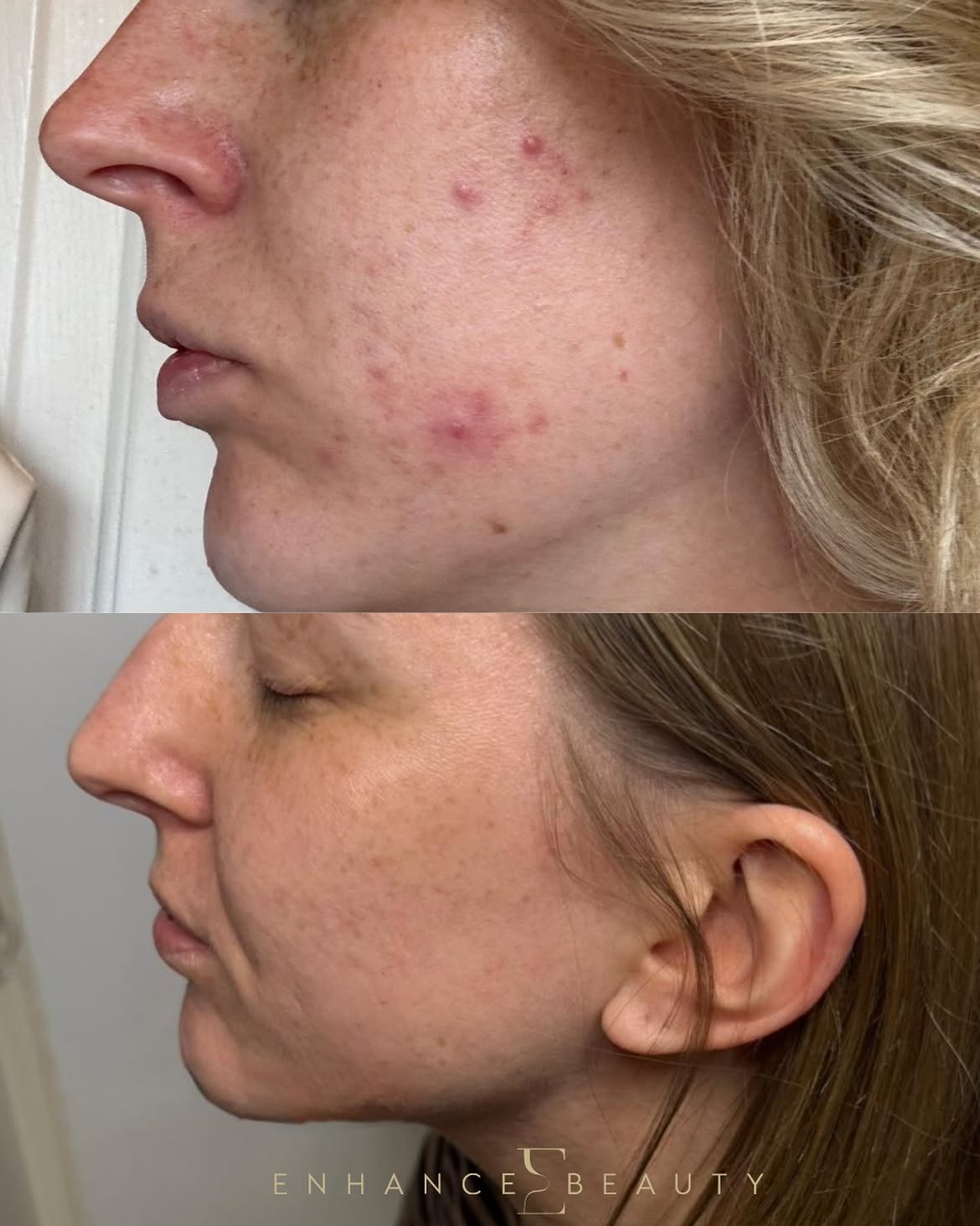
Real client results — Enhance Beauty, Aylesbury
What a Functional Approach Looks Like
A conventional approach to perimenopausal skin usually involves adding more products. These things can help at the surface level. But they do not address what is driving the changes internally, which means results tend to be limited.
A functional approach starts by understanding the whole picture. Hormone levels and how they are shifting. Gut health and digestion. Sleep quality and stress. Lifestyle and nutrition. Only once we understand what is contributing to the skin changes can we build a plan that actually addresses them.
What You Can Start Doing Right Now
—SPF every single day, even in winter
—A gentle barrier-supporting cleanser rather than anything stripping
—Hyaluronic acid on damp skin, sealed in with a richer moisturiser
—Vitamin C in the morning to support collagen and skin tone
—Consider a retinoid in the evening, starting slowly
—Prioritise sleep wherever possible
—Anti-inflammatory foods and adequate protein
Book at Enhance Beauty, Aylesbury
Functional Skin Analysis for Perimenopausal Skin
A thorough consultation designed to understand your skin, your hormones and your lifestyle together. The starting point for real, lasting change.

Jamie Cordice
Functional Skin Practitioner | Certified Menopause Coach
Enhance Beauty, Aylesbury

0 Comments